
Alamance Multi-Day Arrest Sources
The sheriff publishes no 72-hour, seven-day, or weekly blotter. The ACSO press-release archive comes closest. It is an event-driven news archive rather than a true booking log. You will find selected investigations and arrests there, not every intake at the Alamance County Detention Center. One release may cover an old incident. Another may announce a fresh arrest, name several defendants, or seek a wanted person. Publication dates can lag the arrest date by days. City records add more pieces. Graham posts weekly crime-report PDFs that summarize incidents instead of county bookings. Burlington offers police records and crime-data routes but no daily booking log, Mebane provides only report-request guidance, and the P2C roster remains the current-custody source while the court Portal tracks case activity and outcomes.
The sheriff’s official archive shows how selected announcements are organized over time.
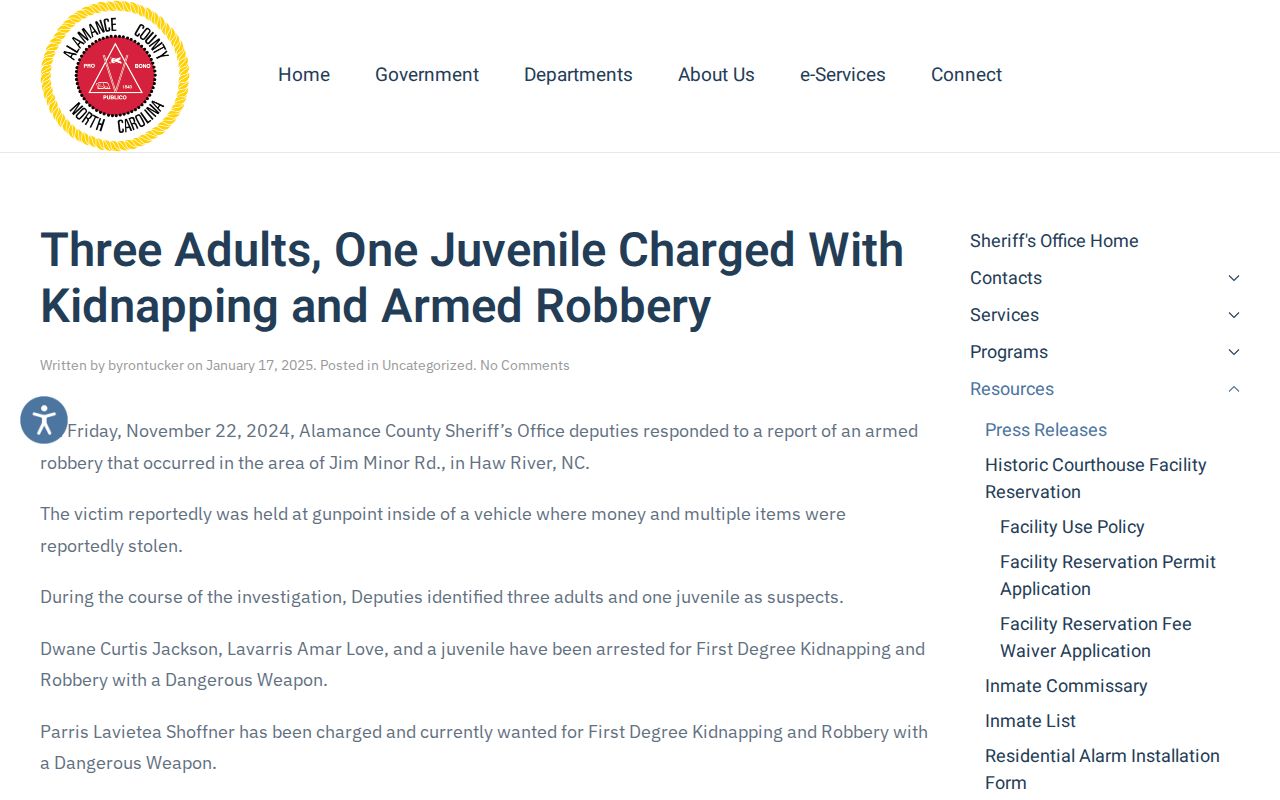
The capture documents dated agency releases, not a full Alamance County jail intake log.
Read the Alamance Police Blotter
Treat the multi-day view as a source comparison, not a card count. Work backward from the event and the agency. Keep three dates distinct: arrest, publication, and court. A delayed story can still report faithfully what an agency announced, though it says nothing about present custody.
- Check the ACSO release archive for a named investigation or sheriff announcement.
- Identify whether ACSO, Burlington, Mebane, Graham, or another agency made the arrest.
- Use that agency’s records office for the incident or arrest report.
- Check P2C only for current county custody, not proof of every arrest in the period.
- Use the Alamance County court Portal or Clerk for the case and final disposition.
Need a same-day check? Use the Alamance 24 Hour Arrests workflow for immediate roster verification instead of this archive-based process.
Alamance Arrest Entry Fields
No single Alamance log carries every booking field. A sheriff release contributes narrative facts and charges, a police report names the incident and agency, and a court file shows hearings and outcomes. P2C handles current custody. Credit each field to whichever source actually supplies it.
| Field | How to interpret it |
|---|---|
| Name | Check spelling and identity; a same-name match is not enough. |
| Arrest date and time | May differ from booking time or the date a warrant was issued. |
| Agency | Shows who initiated the event, not necessarily the current custodian. |
| Charges as booked | Initial charges that may later change. |
| Bond | An initial amount or type that the court may revise. |
| Photo | May be agency-supplied or republished; no universal ACSO display rule is published. |
| Disposition | The later court outcome and the key legal context. |
Sources can withhold information for lawful reasons. Juvenile identities stay protected. Victim and witness details, along with confidential investigative material, may also be held back. Remember that a selected press release is never the whole case file, and a photo beside a news story says nothing about current custody in Alamance County.
Alamance News Arrest Patterns
For local news, the Alamance News Courts & Crime archive carries the load. The paper labels Burlington, Mebane, and Graham items. Police, Sheriff, and Courts tags appear too. It runs weekly and follows events rather than the calendar. That rhythm brings narrative context and later court coverage. But selected stories never equal a county arrest log, as the local Courts & Crime archive makes plain.
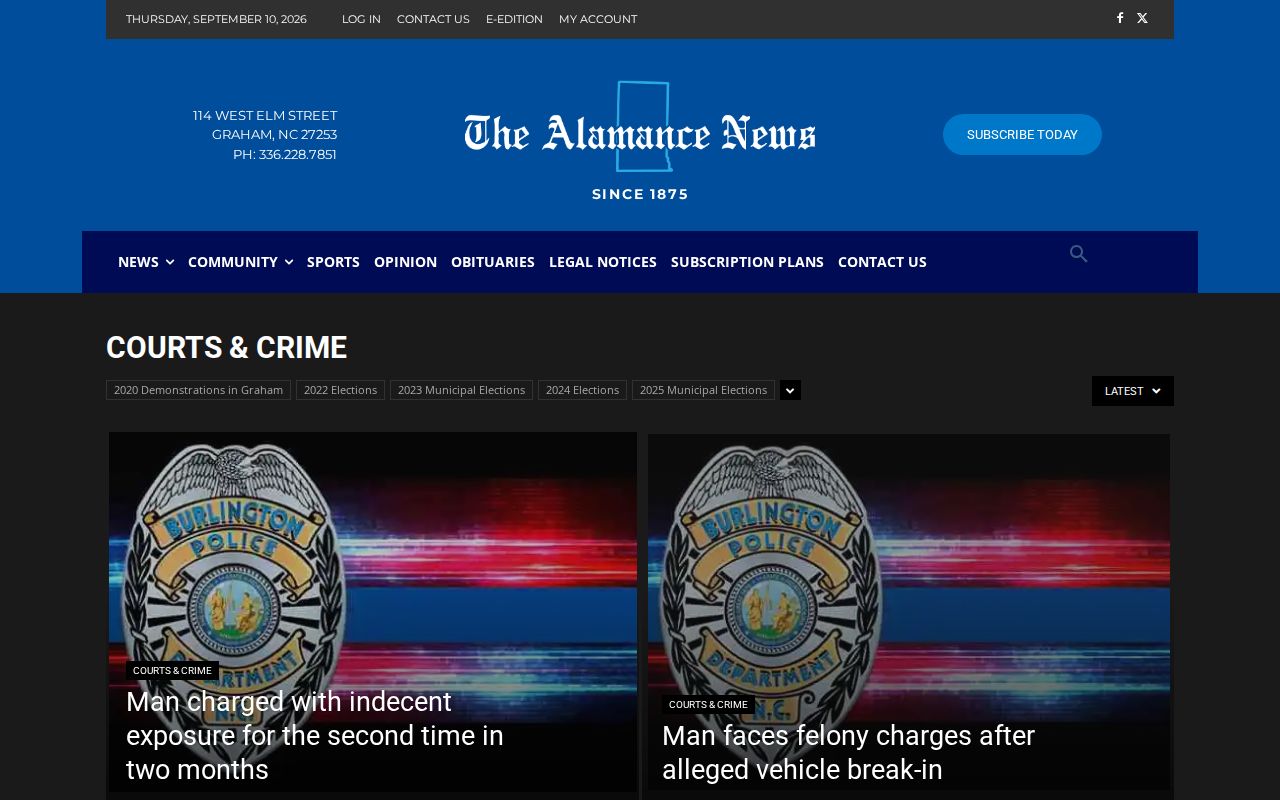
The current Courts & Crimes page splits its police, sheriff, court, and city coverage into separate streams. WXII adds selected regional reports drawn from ACSO releases. Treat those as secondary accounts. The page can point you to a reported event. Still, a missing story proves nothing about whether a booking happened, so confirm arrest details with the agency and outcomes with the court.
Unofficial Alamance Booking Archives
Private publishers fill gaps the sheriff does not. RecentlyBooked runs an Alamance County page describing a rolling 30-day view with checks repeated through the day. Busted Newspaper posts county booking pages. Mugshots.com keeps an older, year-based archive. These are publisher-controlled copies, not official ACSO windows. Their timing tells you nothing about P2C. Start with official sources every time. An unofficial page can surface a tricky spelling or an older reference, though it may preserve a stale photo, miss a release, omit a later dismissal, or copy a field wrong. RecentlyBooked's visible update time is the publisher's stamp, not the sheriff's schedule. The Mugshots.com county years hold historical material rather than a live roster. Anyone comparing channels can see the contrast on the unofficial RecentlyBooked county page, a private multi-day archive standing apart from official ones.
Check any private page against P2C first. Court records settle the rest. Note: Archive depth and photo persistence are publisher choices, and neither shows whether a person remains in Alamance County custody.
Alamance Arrest Archives and Retention
Online entries vanish fast. Alamance County arrest files are sorted into series under the North Carolina sheriff retention schedule. Each series runs on its own clock. Arrest-processing tracking records can be destroyed one year after the arrest. DWI processing tracking gets two years. Standalone arrest reports left out of a case file carry a five-year period.
Inmate incarceration records follow their own rules. Entry and release summaries, detainee arrest sheets, commitment or release orders, and pretrial-release agreements may be destroyed three years after release or transfer. Weekly inmate lists furnished to the Clerk can go once obsolete. Legal holds, audits, litigation, or an approved local schedule can stretch any of these periods. None of it promises online access.
Ask before assuming anything is gone. A written request through ACSO Public Records should carry the full name, approximate date, agency, and exact record type. If ACSO confirms an archival transfer, the North Carolina Archives Government Records Section can explain the schedule or accession. State Archives does not automatically hold old county files.
- Online persistence
- How long a page stays visible.
- Agency retention
- How long the office keeps the underlying record.
- Court record
- The case file and later legal result.
- Archival transfer
- A documented move to an archives collection, which is not automatic.
Alamance Crime Data Is Different
The NCSBI Summary Statistics Viewer counted 4,448 index offenses in 2024. The total spans listed Alamance agencies. Burlington reported 2,477. ACSO accounted for 634, Mebane 736, Graham 420, and Haw River 78. Elon logged 45, and its university campus 58. These are offense counts, not arrest or booking totals. They sketch broad agency context. But they cannot patch missing days in an Alamance County arrest log. One offense may end with no arrest, one arrest, or several. A booking can also stem from a warrant or an event outside that year's count. So never set a news tally, a P2C roster count, or a private booking-card count beside offense data. The two measure different things.